June and July are the months when a lukewarm shower stops being a mild inconvenience and starts being a genuinely miserable way to begin a cold morning. And out here in Wentworth and the surrounding district, winter mornings can be properly cold. The river fog, the frost on the grass, the kind of air that makes you want to stand under a hot shower for ten minutes before you face the day. So when your hot water system is not keeping up, it matters.
The thing that strikes me most about this particular problem is how long people put up with it before they pick up the phone. Weeks, sometimes. The water is not completely cold, so it does not feel urgent. But gradually the shower that used to stay hot for twelve minutes is running out at eight. The temperature that used to be comfortably hot is now just warm enough to tolerate. People adjust, and then they adjust a little more, and before long they have convinced themselves this is just what winter is like.
It is not. Here is what is usually actually going on.
The Three Most Common Reasons Your Hot Water Is Struggling
In most cases, a hot water system that is underperforming rather than completely dead comes down to one of three things. A failing element, a tired thermostat, or a sacrificial anode that has not been touched in years. These are all common, all fixable, and all worth understanding a little so you know what to look out for.
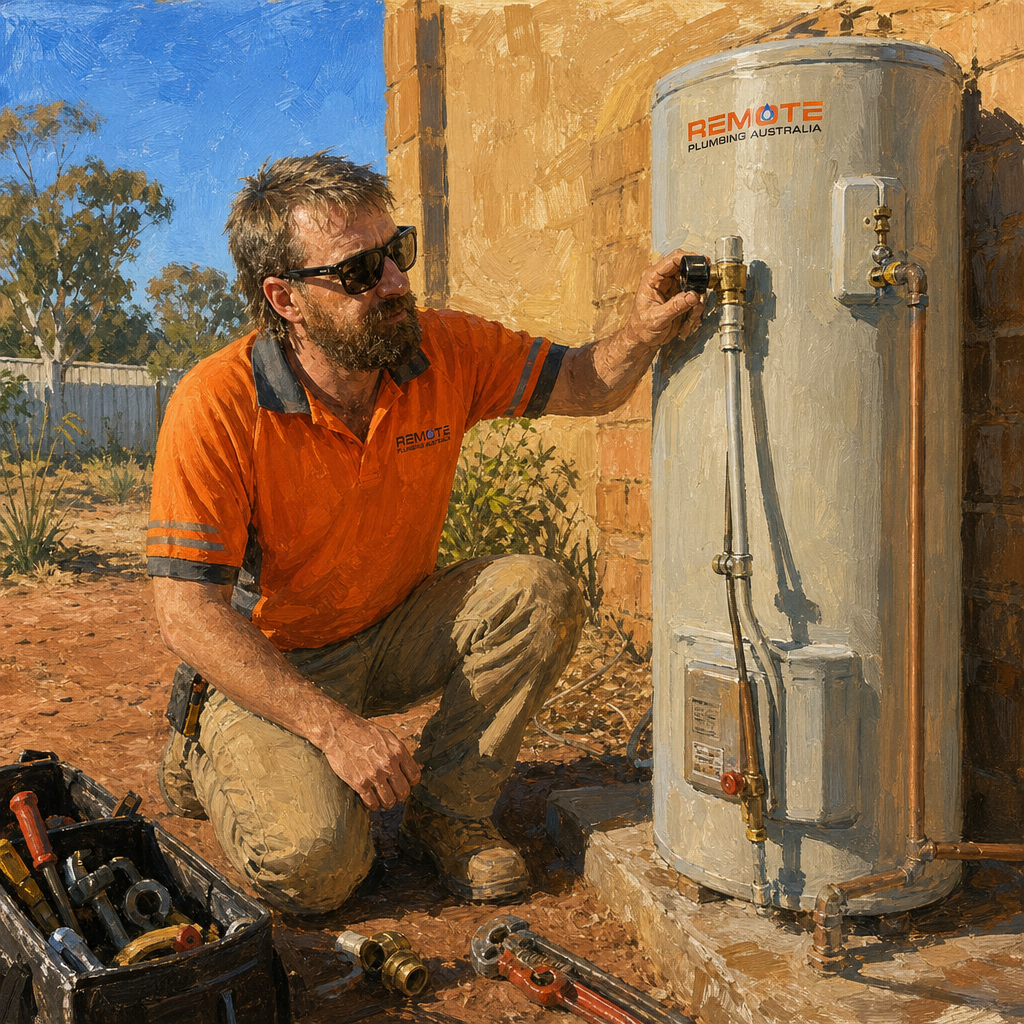
The heating element is the part that actually heats the water in an electric system. Over time, elements can degrade and lose efficiency. They might still work, just not as well as they used to. The result is water that heats up more slowly and runs out sooner. The element has not died completely, it is just not doing the job it used to do.
The thermostat controls what temperature the system heats the water to. When it starts to fail, it can misread the temperature and cut out too early, leaving you with water that is technically warm but nowhere near where it should be. A faulty thermostat can also cause the system to behave inconsistently, hot one morning and barely adequate the next.
The sacrificial anode is the one most people have never heard of. It is a metal rod inside the tank, usually magnesium or aluminium, that is designed to corrode so the tank itself does not. It is a clever bit of engineering and it works well, right up until the anode is completely corroded away and the tank starts taking the hit instead. At that point you are not just looking at reduced performance, you are looking at a tank that is working its way toward failure.
Catching It Early Makes a Significant Difference
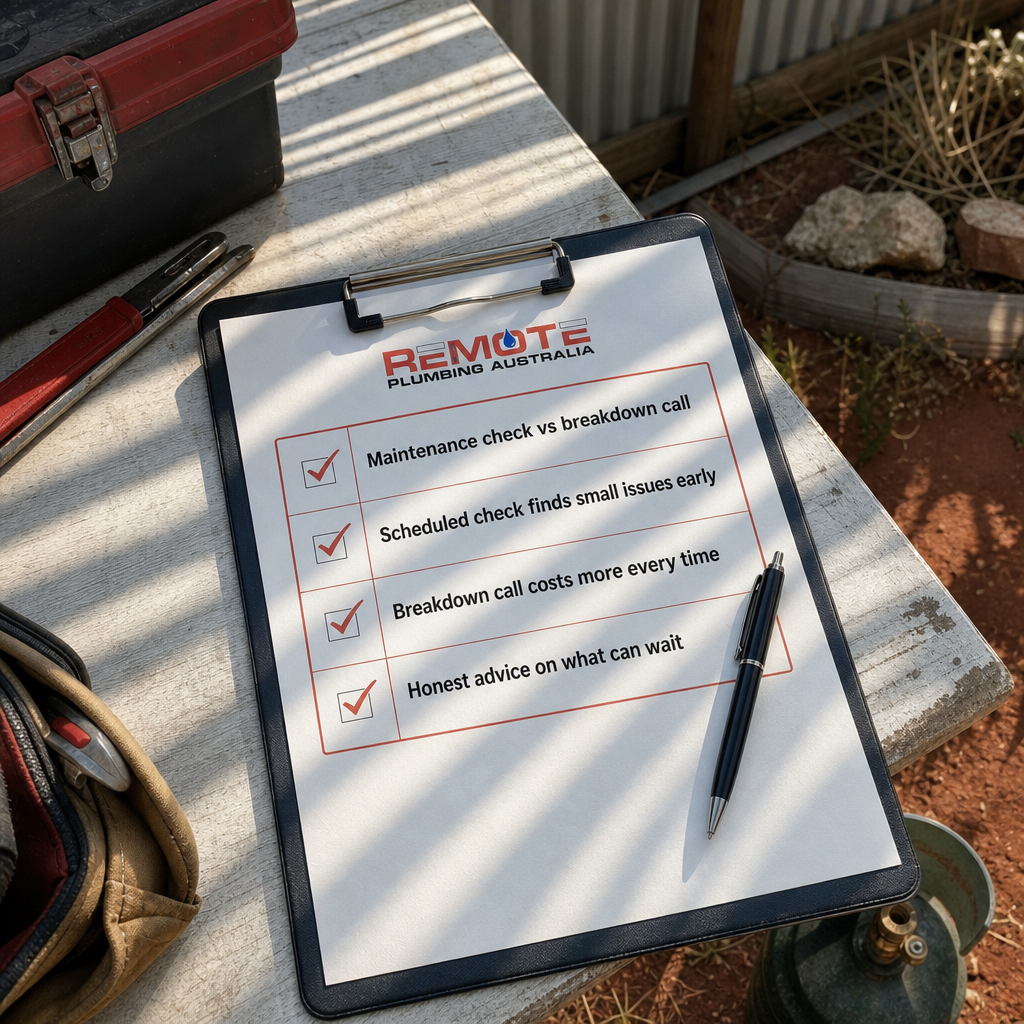
There is a real difference in what it costs and what is involved when you catch these problems early versus when you leave them. A failing element or a thermostat that is on its way out is a straightforward fix. An anode that needs replacing is a routine maintenance job that should be done every few years regardless.
But leave it long enough and the calculus changes. A tank that has been running without a functional anode can develop corrosion and scale internally. A system that has been straining to keep up for months can develop secondary problems. What started as a simple component swap can turn into a full system replacement, and that is a much bigger conversation than it needed to be.
One thing that gets drilled into you when you are working somewhere remote, whether that is a defence facility out of Alice Springs or an Aboriginal community several hundred kilometres from the nearest town, is that preventative maintenance is almost always cheaper than emergency repairs. When there is no backup supplier down the road and no second plumber you can call, you learn to look after your gear before it fails rather than after. That thinking applies just as much to a house in Wentworth or Buronga as it does out in the desert.
Gas Hot Water Systems Have Their Own Set of Issues
If you are on a gas system rather than electric, the fault finding is a little different but the basic principle is the same. A pilot light that keeps going out, a burner that is not firing properly, or a gas valve that is starting to play up can all lead to the same result: water that used to get hot comfortably and no longer does.
Gas systems generally heat water faster than electric systems, so when they start underperforming it can feel more dramatic. The drop in output is more noticeable. If you have a gas hot water system and you are finding it is struggling to keep up in June and July, do not assume it just needs time to warm up. That is not how it works. It is worth having a look sooner rather than later.
What Winter Does to the Problem
Cold weather puts extra load on a hot water system that is already under stress. When the incoming water temperature drops significantly in winter, the system has to work harder to get it to the set temperature. A system that was just keeping up in March may genuinely not be able to keep up in July, even if nothing has technically changed or failed.
In Antarctica, hot water systems face a version of this problem at a scale that is hard to imagine from here. Incoming water temperatures can be extreme, the demand is concentrated, and there is no calling someone in from outside if something fails. You learn very quickly to understand how a system behaves under load, and to recognise the early signs that something is starting to struggle before it becomes a crisis. The same signs exist in a domestic system, just in a more forgiving environment.
The short version: if your system was borderline before winter, winter will push it over that edge. This is exactly the time of year to get it looked at rather than hope it holds on.
What to Do if Your Hot Water Is Not Keeping Up
If your hot water is not as hot as it used to be, running out faster than it should, or behaving inconsistently, the right move is to have it checked by a licensed plumber. Not because it is necessarily a big job, but because finding out what is actually going on is the only way to know what you are dealing with.
Most of the time it is straightforward. An element, a thermostat, an anode. Work that can be done promptly and that gets your system back to where it should be before winter properly digs in. The situations that turn into a full replacement are usually ones where the small problems were left to run for a long time, not ones that were caught early and fixed properly.
If you are in Wentworth, Dareton, Buronga, Gol Gol, Pooncarie, or anywhere in the surrounding district and your hot water is not keeping up, it is worth a call before you spend another fortnight adjusting to a cold morning shower and pretending it is fine. It is not fine. You deserve a hot shower, especially in July.
Need a plumber in Mildura? Call Brad on 0411 755 399 or visit remoteplumbingaustralia.com.au