A dripping garden tap is easy to ignore. It's outside, it's small, and it doesn't feel urgent. But a damaged rubber washer inside a garden hose connection can leak around 100 millilitres every single minute. That adds up to roughly 144 litres a day, which is more water than most people use in a full shower session. Every day. Gone into the ground or running down the driveway while you're thinking about something else entirely.
In the Sunraysia, where water is genuinely precious and summer water restrictions are part of life, that kind of waste matters. It also adds up on your water bill in a way that's completely avoidable. So here are some practical checks you can do right now, before the heat of late spring and summer really kicks in.
Check the Garden Tap Itself First
The most common source of an outdoor water leak is the tap itself, specifically the internal washer. When a garden tap drips even when it's turned off tight, or when you can feel water weeping around the handle or the spout, the washer has usually worn out or warped. In Mildura's climate, rubber components cop a lot of UV and heat exposure over the years, and they don't last forever.
Have a look at the tap when it's fully closed. If there's any drip from the spout, any moisture around the spindle or the packing nut just behind the handle, or if you need to crank it really hard to stop the drip, those are all signs the internals need attention. This is not a job to leave. A licensed plumber can replace tap washers and packing quickly, and the difference in your water bill will likely be noticeable.
Check the Hose Connection and Fittings
The connection point between your garden hose and the tap fitting is one of the most common spots for a slow, sneaky leak. The small rubber washer inside the hose fitting is what creates the seal. When it cracks, shrinks or gets pushed out of position, water leaks continuously from that join even when the hose itself is fine.
To check this properly, screw your hose onto the tap and turn the tap on fully. Run your hand around the join where the fitting meets the tap. Even a small amount of moisture or a steady drip from that point tells you the washer is gone. Turn the tap off and unscrew the hose fitting. Look inside the female end of the fitting for the small rubber washer. If it looks flat, cracked, misshapen or is missing altogether, that is your problem. A plumber can assess whether the fitting itself needs replacing or whether there is a deeper issue at the tap end worth addressing while they are there.
Walk the Tap Line and Check for Hidden Leaks
If you have an outdoor tap connected to an underground poly pipe or copper line running from the house, it is worth walking the path of that line and looking for signs of a leak below ground. You are not looking for a puddle necessarily. You are looking for a section of garden that stays wet when everything else is dry, soft or spongy soil in a line, or grass that is noticeably greener and lusher in a specific strip.
Underground leaks in outdoor supply lines are surprisingly common, especially in homes where the pipe runs close to tree roots or was laid without adequate protection. The pipe can crack slowly over time and lose a significant amount of water before anyone notices. If you find a suspect area, do not dig it up yourself. A licensed plumber can locate and repair the fault properly without turning your garden into a construction zone unnecessarily.
Check Your Water Meter for Movement When Nothing Is Running
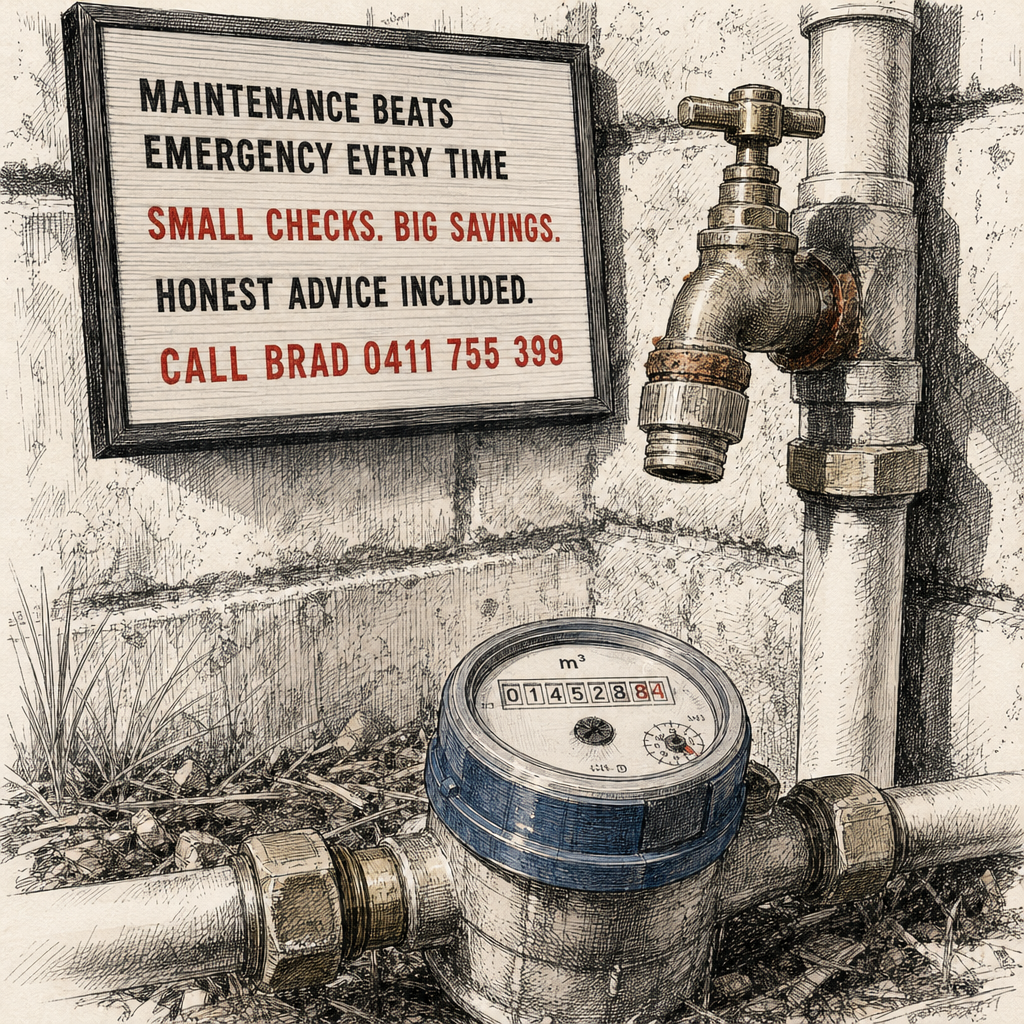
This is one of the most reliable DIY checks a homeowner can do. Turn off every tap, appliance and irrigation system in the house. Make sure no one flushes a toilet or uses anything with water for about five minutes. Then go out to your water meter and look at the dial or the small indicator on the face of the meter. If it is moving, water is flowing somewhere in your property and you have a leak worth investigating.
This check catches leaks that are completely invisible to the eye, whether that is a slow garden tap, a weeping underground pipe, a dripping cistern, or a water service connection that has started to fail. It costs nothing to do and it gives you a definitive answer very quickly. If the meter is moving and you cannot find an obvious source, that is a good reason to call a plumber and get a proper assessment before a small loss becomes a big problem.
Do Not Forget the Irrigation System
A lot of homes in the Sunraysia run drip irrigation or sprinkler systems connected to an outdoor tap or a dedicated garden water line. These systems have multiple potential leak points including fittings, valves, solenoids and the poly pipe runs between them. They also spend most of their time switched off, which means a slow leak at a join can go completely undetected for weeks or months.
Run your irrigation system manually and walk the entire run while it is operating. Check every fitting and join visually. Look for spray going in an unexpected direction, water pooling at a connection, or sections of pipe that feel soft or have obvious moisture on the outside. An irrigation system running inefficiently is not just a waste of water. It can also create conditions that damage garden beds, cause subsidence around paths and paving, or wet areas near the house foundation over time.
The good news is that most outdoor plumbing issues are simple and affordable to fix when you catch them early. Ignored, they cost far more, both in wasted water and eventual repair bills. If any of these checks turn up something you are not sure about, give Brad a call. He will have a look, explain exactly what he finds, and you can decide from there. No pressure, no unnecessary work recommended.
Need a plumber in Mildura? Call Brad on 0411 755 399 or visit remoteplumbingaustralia.com.au