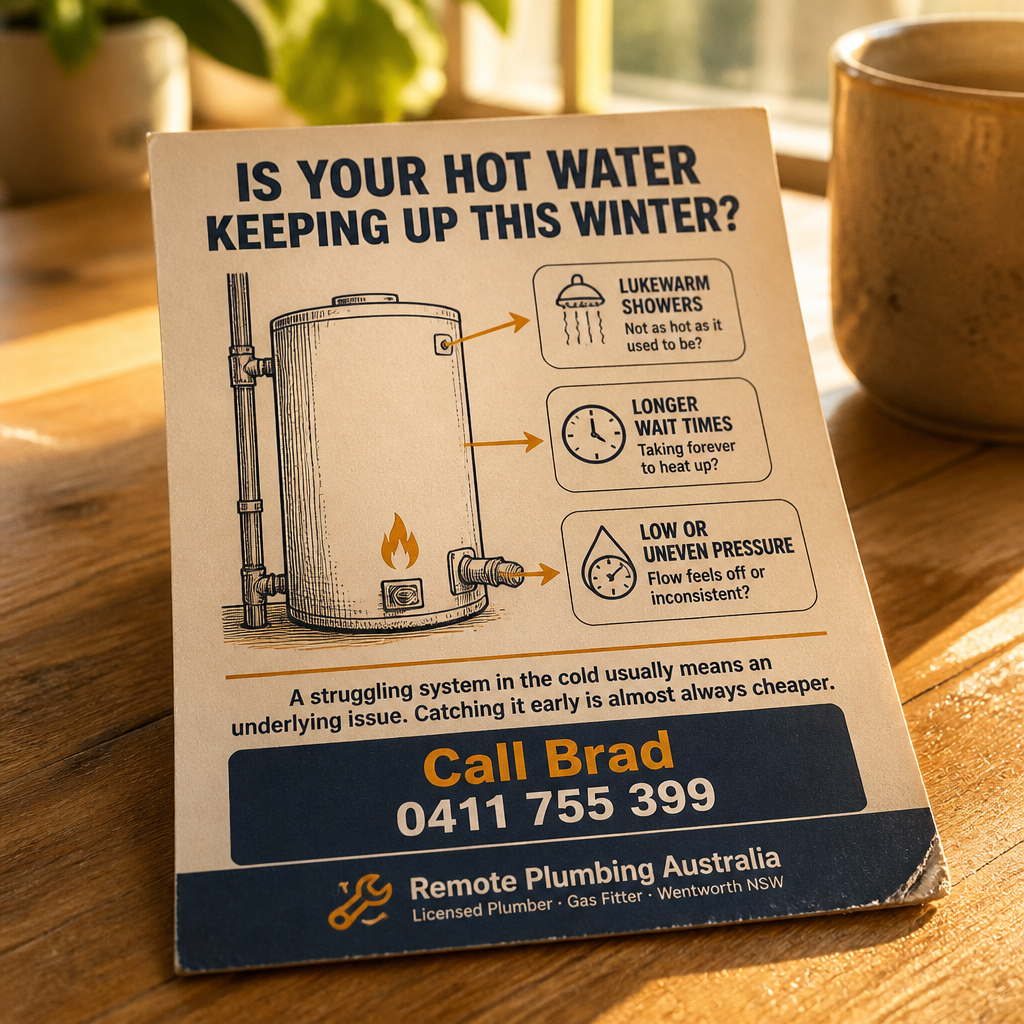
Winter in the Riverland and Mallee district is not Antarctica, but it is cold enough to expose every weakness in your hot water system that you had quietly been ignoring since autumn. Lukewarm showers, longer waits at the tap, pressure that feels a bit off. A lot of people put up with this for weeks, sometimes months, before they pick up the phone. And by the time they do, what could have been a simple fix has usually turned into something more involved.
This time of year more than any other, I get calls that start with "it's not completely broken, but something just isn't right." That description, almost word for word, is probably the most common thing I hear in June and July. So here is what is usually going on, and why you are better off getting it sorted sooner rather than later.
Cold Water Takes More Energy to Heat
This sounds obvious, but it is worth spelling out because it explains a lot. In summer, your cold water supply is not that cold. It has been sitting in pipes that have been warmed by the sun and the air around them. By the time it reaches your hot water system, it is already partway there.
In winter, that incoming water can be genuinely cold. Your hot water system has to work harder just to get to the same temperature it was hitting easily in January. If everything in the system is in good condition, it manages fine. But if there is an element that is starting to degrade, a thermostat that is not quite calibrated right, or sediment that has built up in the tank over a few years of use, the extra load of winter pushes it into territory where it starts to struggle. The system was compensating for a problem you did not know about. Winter just ran out of compensation.
Sediment Build Up Is More Common Than People Realise
This is one of the most common underlying issues in hot water systems that have been running for a few years without any maintenance. Over time, minerals in the water settle at the bottom of the tank. This layer of sediment sits between the heating element and the water, which means the element has to work harder and longer to heat the same volume of water.
You might notice the system taking longer to recover after a big draw, or the water not getting quite as hot as it used to. You might hear a rumbling or popping sound when the system is heating. That noise is often the element working through the sediment layer. None of these are signs that your system is about to die tomorrow. But they are signs that something is building, and cold weather accelerates how noticeable it becomes.
Flushing a hot water system periodically is one of those maintenance jobs that gets skipped because everything still seems to be working. The problem is that by the time it stops working, the sediment has often done its damage.
The Thermostat and the Element Are Worth Checking
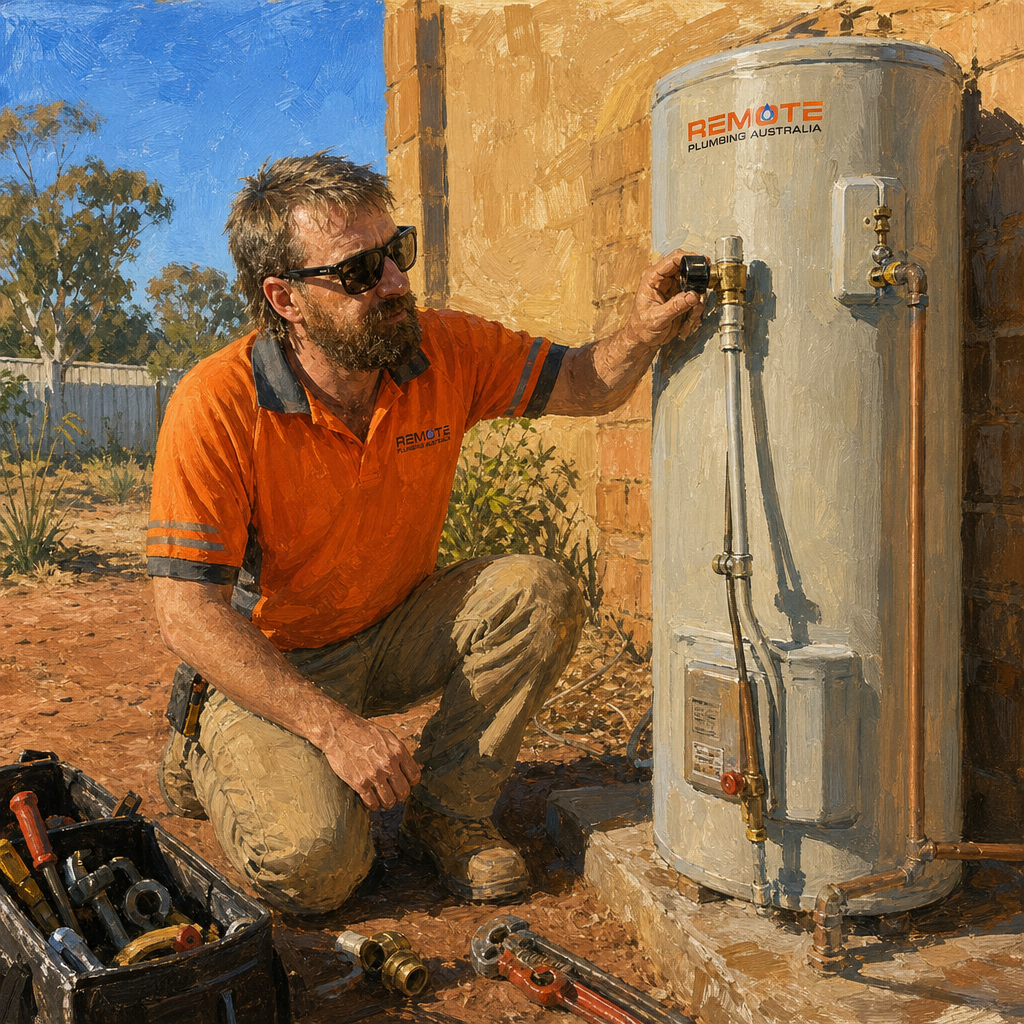
On an electric storage hot water system, there are usually two components doing the heavy lifting: the element and the thermostat. The thermostat tells the element when to turn on and off. The element does the actual heating. When either of these starts to go, the symptoms can look similar to sediment issues: slower recovery, lower peak temperature, inconsistent output.
A thermostat that is reading slightly off might be cutting the element out before the water has fully heated. An element that is partially failed might still work, just not efficiently. Both of these are relatively straightforward repairs when caught early. The cost difference between replacing a single element and replacing an entire system is significant. Getting someone to take a look when the system is struggling, rather than when it has completely given up, is almost always the better financial decision.
Gas hot water systems have their own set of considerations. Pilot light issues, gas valve problems, and burner inefficiency can all cause similar symptoms. The principle is the same: a system that is running harder than it should be in winter usually has a reason for it.
When the System Is Just Getting Old
Most storage hot water systems are designed to last somewhere in the range of eight to twelve years with reasonable maintenance. A lot of systems in this region push further than that, which is a credit to the original engineering, but also a sign that an honest conversation about replacement might be overdue.
If your system is getting on in years and starting to show winter symptoms, the question is not really whether it will fail, but when. A system that is struggling in its tenth or eleventh year of service might limp through this winter, but it is probably not going to see many more. Planning a replacement before you are doing it in an emergency, without hot water, in the middle of a cold snap, puts you in a much better position. You get to choose the right system for your household, compare options properly, and schedule the work at a time that suits you.
There are also situations where a system that has reached a certain age simply does not justify the cost of repairs. A good plumber will tell you which situation you are in, rather than just replacing parts on a system that is well past its useful life. That is the kind of honest assessment that makes a real difference to what you end up spending.
What to Do If Your Hot Water Is Not Right
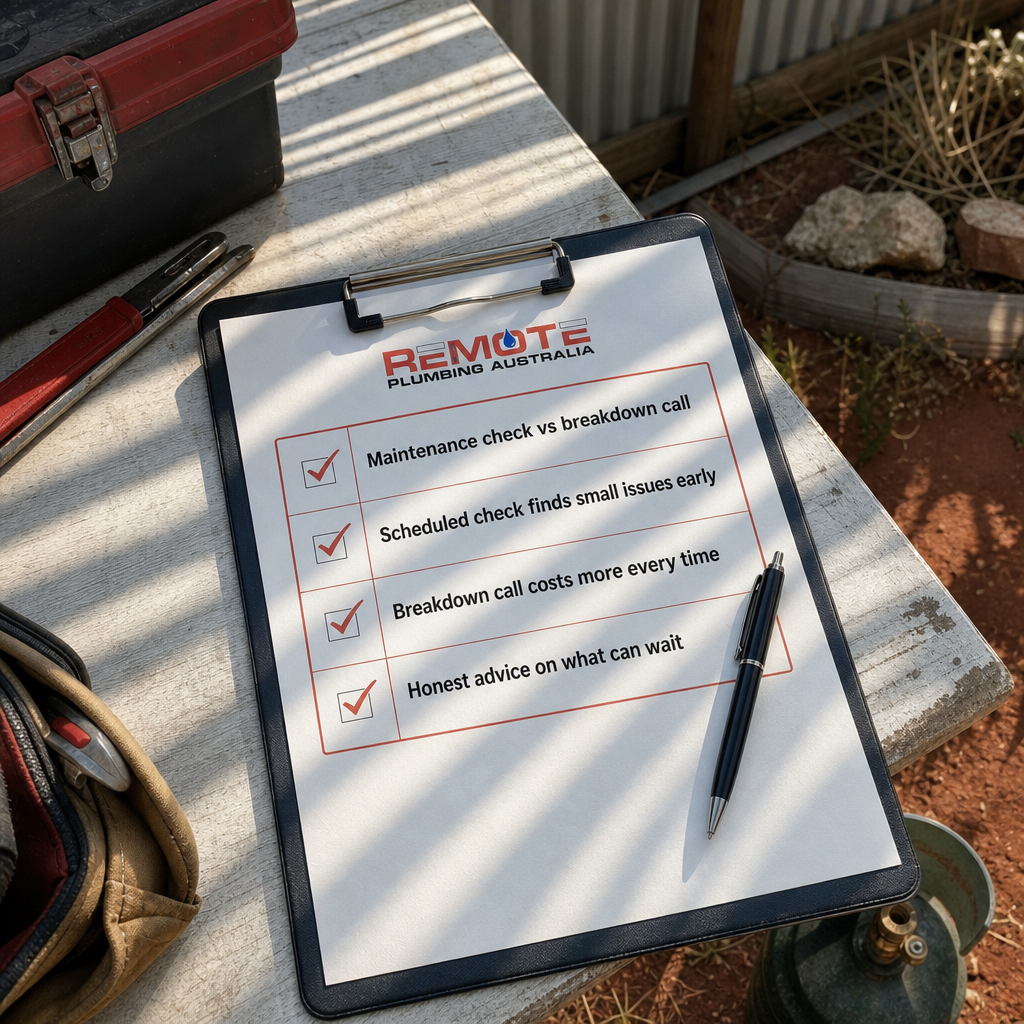
The short answer is: do not wait. If the shower is lukewarm, the recovery time has blown out, or you are hearing sounds you have not heard before, get it checked. The longer a struggling system runs without being looked at, the more likely a simple fix becomes a full replacement.
This is not a situation where keeping an eye on it is a useful strategy. Hot water systems do not get better on their own. They either hold at a reduced performance level until something gives, or they degrade further. Winter is the time when they degrade fastest, because they are working hardest.
Getting a licensed plumber out to look at the system when it is underperforming, rather than when it has completely failed, is almost always the more affordable path. You are not in emergency mode, there is no pressure, and there is time to make a good decision.
If your hot water has been a bit off lately, it is worth a call. A quick look might tell you everything is fine and give you peace of mind. Or it might catch something early enough to save you a lot of hassle down the track. Either way, you are better off knowing.
Need a plumber in Mildura? Call Brad on 0411 755 399 or visit remoteplumbingaustralia.com.au