Water pressure is one of those things you don't think about until it's not right. You turn on the tap and instead of a decent stream you get a trickle, and straight away you're wondering whether something's seriously wrong. The good news is that most of the time it's not. But the answer does depend on whether it's just one tap playing up or the whole house.
When It's Just One Tap, Check the Aerator First
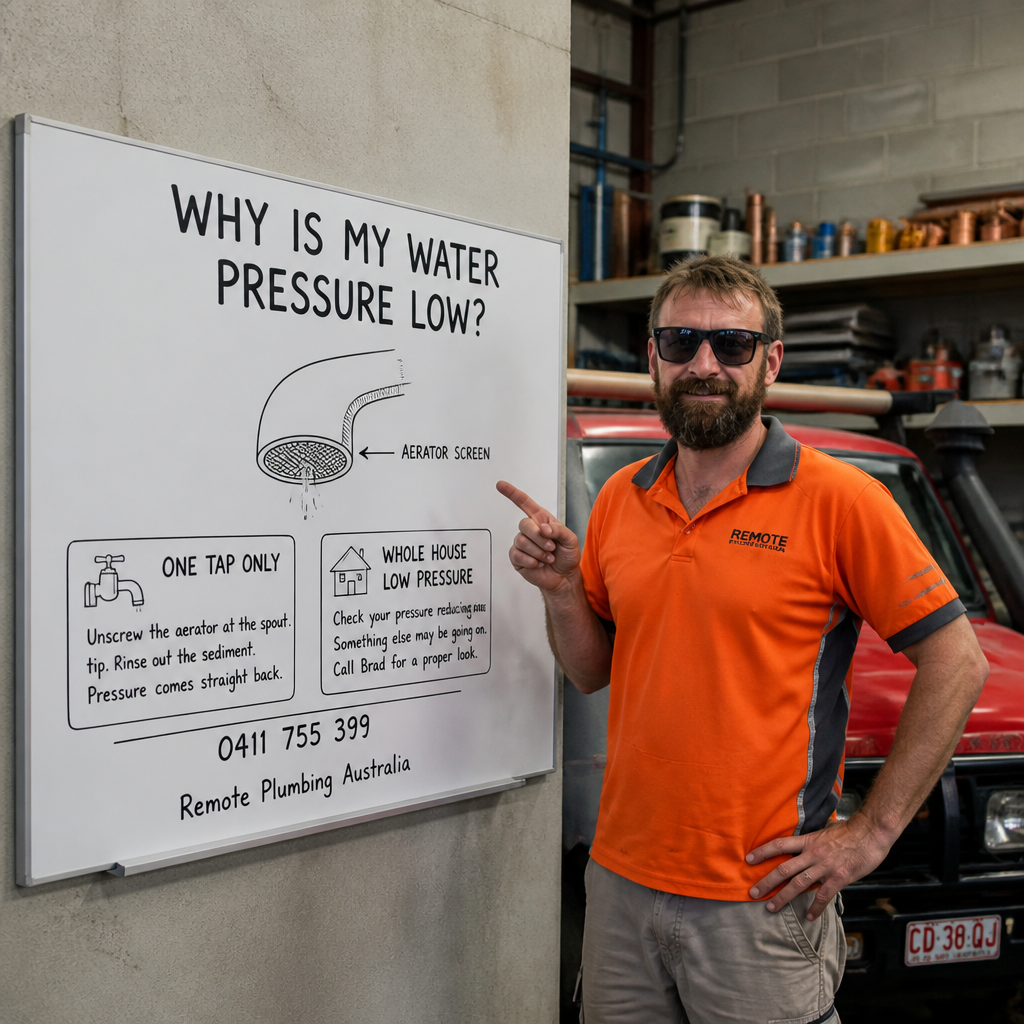
If the pressure is low in a single tap and everything else in the house is fine, the aerator is almost always your first stop. The aerator is that small mesh screen screwed onto the end of the spout. You've probably never noticed it, but it's doing quiet work every day, mixing air into the water stream to give you a steady, even flow.
The problem is that the mesh catches sediment over time. Minerals, fine grit, bits of scale from the pipes. In areas with harder water, which describes a fair chunk of the Sunraysia region, this builds up faster than you'd expect. Eventually the flow gets restricted and the pressure at that tap drops noticeably.
The fix is simple. Unscrew the aerator by hand or with a pair of pliers if it's on tight, give it a rinse under another tap or soak it in a bowl of water for a few minutes, and screw it back on. In most cases the pressure comes straight back. It costs nothing and takes five minutes. Worth trying before you call anyone.
Showerheads can have the same issue. The small nozzle holes block with mineral deposits over time, and the result is a weak, uneven spray. A soak usually sorts it out. If the head is older and the nozzles are beyond a clean, a replacement isn't expensive.
When the Whole House Has Low Pressure, That's a Different Conversation
If you're getting weak flow at every tap and not just one, a blocked aerator isn't your answer. That pattern points elsewhere, and there are a few things worth considering.
The most common culprit is the pressure reducing valve, sometimes called a PRV. Most homes in Australia have one fitted to the main water supply line. Its job is to take the pressure coming in from the street main, which can be quite high, and bring it down to a safe and comfortable level for your household pipes and appliances. They typically aim to keep pressure somewhere in the range that suits household fixtures and doesn't stress your hot water system or taps.
PRVs have a service life. Over years they can wear internally, the diaphragm can fail, or they can drift out of their target range. When that happens you'll often notice it as lower pressure across the whole house. Sometimes they fail in the other direction and let pressure through too high, which can cause banging pipes and stress on appliances. Either way, a faulty PRV is something worth having looked at by a licensed plumber.
Other causes of whole house low pressure include a partially closed isolation valve somewhere on the main line, a leak in the supply pipe that's bleeding pressure before it reaches your taps, or an issue on the water authority's side of the meter. Checking your neighbours isn't a bad idea. If they're experiencing the same thing, it's likely a network issue and a call to the water authority is the starting point.
Hard Water in Sunraysia and What It Means for Your Pipes
The Murray River system that supplies much of the Sunraysia region carries minerals, particularly calcium and magnesium, at levels that are on the harder end of the scale compared to many parts of Australia. That's not unusual for an inland river system drawing from a large catchment, and it's not unsafe to drink. But it does affect what happens inside your plumbing over time.
Hard water leaves scale deposits. You'll see it as the white chalky build up around taps and on the inside of kettles. Inside your pipes and fixtures, the same thing is happening, just out of sight. Over years this scale can narrow the internal diameter of older pipes and fittings, which contributes to reduced flow. Aerators and showerheads are the most visible victims because they're easy to remove and inspect.
It's worth doing a check of your aerators and showerheads every year or two as a basic habit. It takes very little time and it keeps your pressure where it should be without needing any professional help.
When It's Worth Calling a Plumber
The aerator test is a fair starting point and worth doing yourself. But there are situations where a licensed plumber should be taking a look rather than guessing your way through it.
If the pressure is low throughout the house and cleaning aerators hasn't changed anything, you need someone to check the PRV and the main supply line. A PRV replacement or adjustment is a plumbing job, not a DIY one, and getting it wrong can cause real damage to taps, appliances and hot water systems.
If you have noticeably different pressure at different times of day, that's a sign of something worth investigating. Pressure that changes with demand on the network or within the home can point to a failing valve or a supply issue that needs professional diagnosis.
If you've noticed damp patches, a water bill that's jumped without explanation, or the sound of water running when everything is off, low pressure might be a symptom of a leak somewhere in the line. That's not a wait and see situation. Hidden leaks cause damage quickly and they don't fix themselves.
Working out of remote communities in Central Australia for years, the one thing that became obvious quickly was that small pressure issues left undiagnosed tend to turn into bigger problems. When you're hundreds of kilometres from parts and help, you learn to take the early signs seriously. The same principle applies in Sunraysia, even if a plumber is a phone call away rather than a day's drive.
A Quick Checklist Before You Call
- Is it just one tap or the whole house? That single question narrows it down significantly.
- If it's one tap, unscrew and rinse the aerator. For a showerhead, soak it and check the nozzles.
- If it's the whole house, check that any isolation valves on the main line are fully open.
- Ask a neighbour whether they're having the same issue. If they are, contact the water authority first.
- If none of that resolves it, or if you're unsure about any step, get a plumber to have a look at the PRV and main supply.
Most water pressure issues in a Sunraysia home are either a simple aerator clean or a PRV that needs attention. Neither should be left to drag on. The aerator you can knock over in five minutes yourself. The PRV is a job for a licensed plumber, and it's usually a straightforward one. If you're not sure which one you're dealing with, or if something doesn't add up, give Brad a call and he can talk it through with you before anyone needs to come out.
Need a plumber in Mildura? Call Brad on 0411 755 399 or visit remoteplumbingaustralia.com.au.