Water pressure is one of those things you never think about until something goes wrong. Then suddenly it is all you think about. Your shower feels like someone blowing through a straw. Or the opposite, taps that hammer and shudder like they are angry at you. Either way, your home is telling you something.
Most homeowners have no idea how water pressure actually works in their home, and that is completely fine. It is not your job to know. But understanding the basics means you can spot a problem early, describe it clearly to your plumber, and avoid paying for a repair you did not need. So let me walk you through it properly.
Where Your Water Pressure Comes From
Water reaches your property through the mains supply, which is managed by your local water authority. In Mildura and the Sunraysia region that is Lower Murray Water. The pressure in the mains is what pushes water through your meter, along your service line, and into the pipes inside your home.
In most Australian homes, the incoming mains pressure can vary quite a bit depending on your street, your elevation, and how far you are from the nearest reservoir or pumping station. That is why homes just a few streets apart can have noticeably different pressure. It is not random, it is just geography and infrastructure doing their thing.
Most residential plumbing systems in Australia are designed to operate comfortably somewhere between 200 and 500 kilopascals, which is the unit plumbers use for pressure. Below that range things feel sluggish. Above it, you start putting unnecessary stress on your pipes, fixtures and appliances.
What a Pressure Limiting Valve Does and Why It Matters
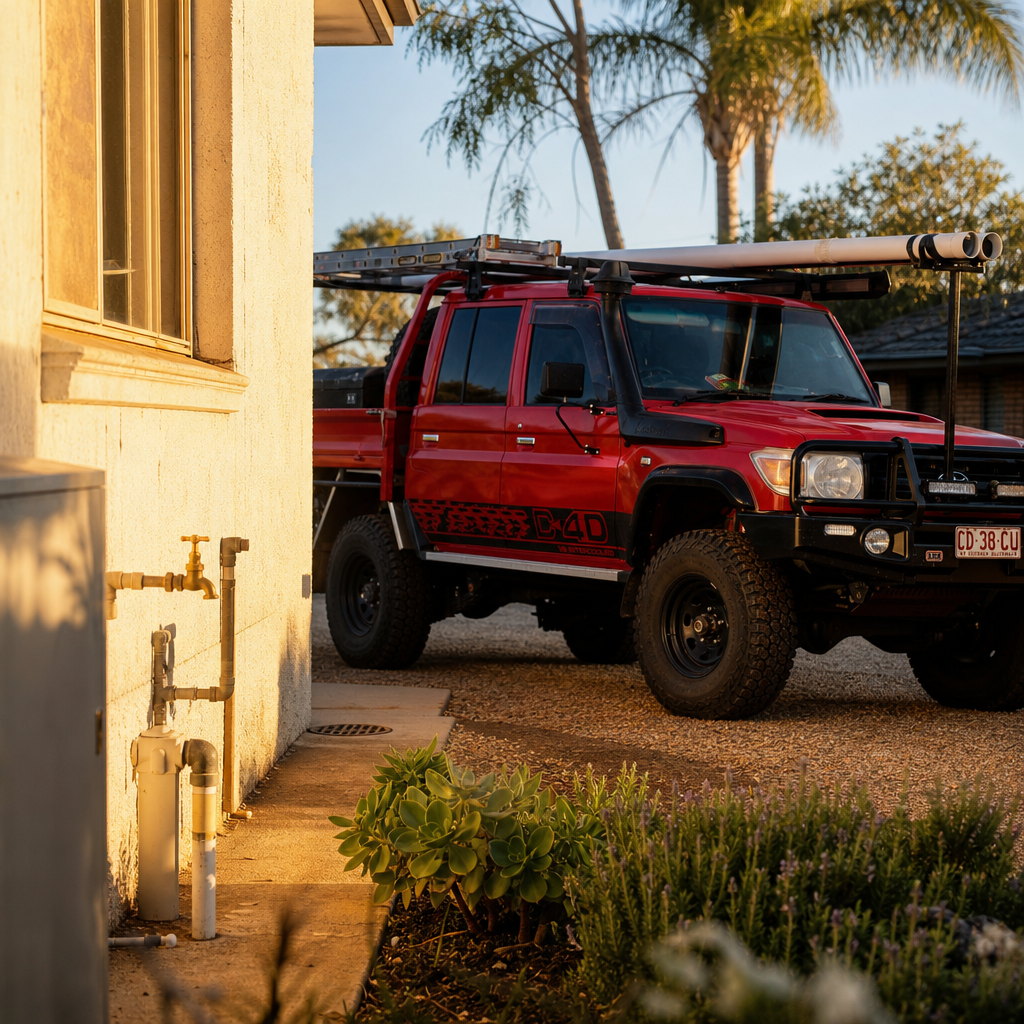
This is the part most homeowners have never heard of, and it is genuinely important. Many homes have a pressure limiting valve, sometimes called a PRV, fitted near the water meter or where the service line enters the house. Its job is exactly what the name suggests. It limits the incoming pressure to a level your internal plumbing can comfortably handle.
If your home has one and it is working well, you probably never notice it. If it starts to fail, you might notice hammering pipes when you open taps quickly, water that seems excessively forceful, or fittings and flexi hoses that keep failing earlier than they should. That last one matters because a failed flexi hose under a basin or behind a toilet can discharge a significant volume of water in a very short time.
Not every home has a PRV fitted. Older homes in particular may have been built before they were standard practice. If you have ever had a plumber mention your pressure seemed high, this is likely what they were referring to.
Low Pressure Versus High Pressure and How to Tell Which One You Have
People often assume that any water pressure problem is low pressure, because the symptom they notice most is weak flow. But weak flow and low pressure are not always the same thing. It is worth understanding the difference.
Genuinely low pressure means the water arriving at your property is not coming in with enough force. This can happen if the mains supply in your street has a problem, if your service line is partially blocked or corroded, or if there is a significant leak somewhere between the meter and your taps.
Weak flow with normal pressure usually means there is a restriction somewhere specific. A blocked aerator screen on a tap is one of the most common culprits, and in the Sunraysia region our water has enough mineral content to build up on fixtures over time. A hot water system that is scaling up internally can also restrict flow on the hot side while the cold side feels fine. This is a really useful clue when you are trying to describe a problem to your plumber.
High pressure on the other hand often goes unnoticed until something fails. Pipes that knock loudly when taps are shut off, a pressure relief valve on your hot water system that drips regularly, or flexi hoses and tapware that seem to wear out sooner than expected can all point to pressure that is running too high for your system.
How Pressure Behaves Differently Through Your Hot and Cold Systems
Here is something that surprises a lot of people. In a storage hot water system, the cold water pressure and the hot water pressure behave differently, and deliberately so.
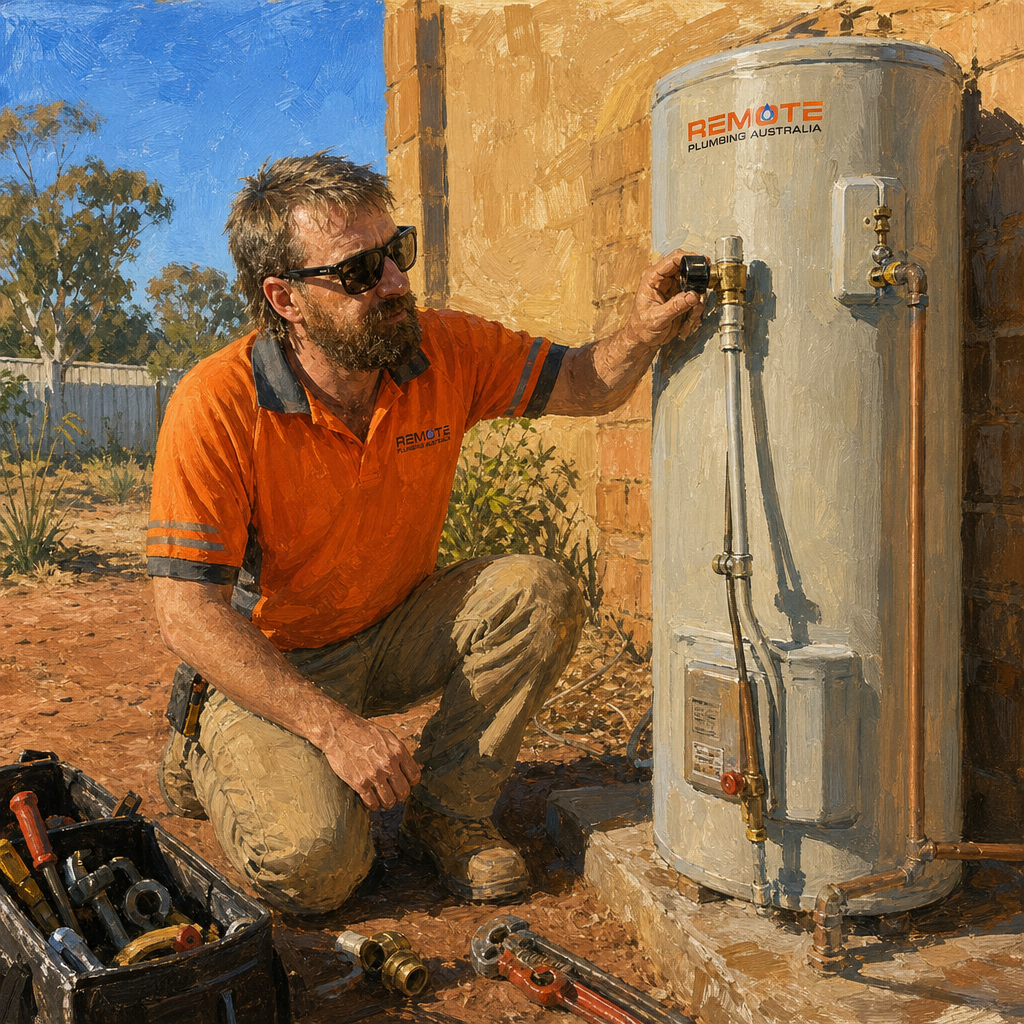
Cold water comes in at mains pressure. Your hot water system heats and stores water, and as water heats up it expands. That expansion has to go somewhere. Most systems have a pressure and temperature relief valve, often called a PTR valve, fitted to the tank. This valve is a safety device that releases pressure if it builds up beyond safe levels. If yours is dripping or discharging regularly, that is worth getting looked at because it means something in the system is not quite right.
Instantaneous or continuous flow hot water systems work differently again because they heat water on demand rather than storing it. Pressure behaviour through these units depends on the unit itself and how it is installed. In both cases, if your hot water pressure feels noticeably different to your cold, that is a useful thing to mention when you call a plumber.
What You Can Actually Do About Pressure Problems
This is the honest part of the conversation. Some pressure issues have a straightforward fix, like cleaning a tap aerator or checking whether a valve has been accidentally turned partially closed. Others, like a failing PRV, a corroding service line, or a hot water system that is starting to scale and restrict flow, need a licensed plumber.
Water pressure work sits in that category of things that can look simple on the surface but connect directly to the safety and integrity of your whole plumbing system. A PRV set at the wrong pressure, or a PTR valve that is not functioning properly, are not small issues. They are the kind of thing that protects your home from real damage.
The most common situation I see is a homeowner who has been putting up with odd pressure for a while, assuming it is just normal, and it turns out to be something that was easy to fix once someone actually looked at it. The fix was straightforward. The delay was the only cost.
If your pressure feels off in any direction, or you have pipes that knock and bang, or your hot water flow seems to have changed compared to your cold, it is worth a conversation. A quick visit from a licensed plumber can tell you pretty quickly whether you have a simple restriction, a valve that needs attention, or a system that is working exactly as it should.
With over 20 years working in demanding environments from remote communities in Central Australia to two seasons at Casey Station in Antarctica, pressure systems are something I have dealt with in conditions far less forgiving than a Mildura summer. The principles are the same everywhere, and so is the value of just understanding what you are looking at before jumping to conclusions.
Honest advice. Fair pricing. Done right.
Need a plumber in Mildura? Call Brad on 0411 755 399 or visit remoteplumbingaustralia.com.au