Winter has a way of making you appreciate hot water like nothing else. A cold morning, a warm shower, no drama. That is the dream. But for a lot of people in the Wentworth district, winter is also the season when the hot water system finally gives up after months of quietly struggling. And it always seems to happen at the worst possible time.
The good news is that most hot water systems give you plenty of warning before they fail. You just have to know what to look for.
Why Winter Is the Crunch Point for Hot Water Systems
Your hot water system works harder in winter. The incoming cold water is colder, the ambient temperature is lower, and the system has to work harder to deliver the same result. If there is an underlying issue, whether that is sediment buildup, a failing element, a corroding anode rod, or a slow leak around fittings, winter is when that issue tends to become a problem you cannot ignore.
Systems that have been running quietly with a small fault for months can deteriorate quickly once the extra demand hits. That is why the middle of July is such a common time for hot water calls. Not because systems randomly fail, but because the extra strain finally tips things over the edge.
The pattern holds true whether you are in Wentworth, Buronga, Pooncarie, or out on a property further afield. Cold weather and tired hot water systems are not a great combination anywhere.
The Warning Signs Worth Knowing
Most hot water problems do not arrive without warning. They build up slowly, and the signs are easy to brush off if you are not paying attention. Here are the ones most worth knowing about.
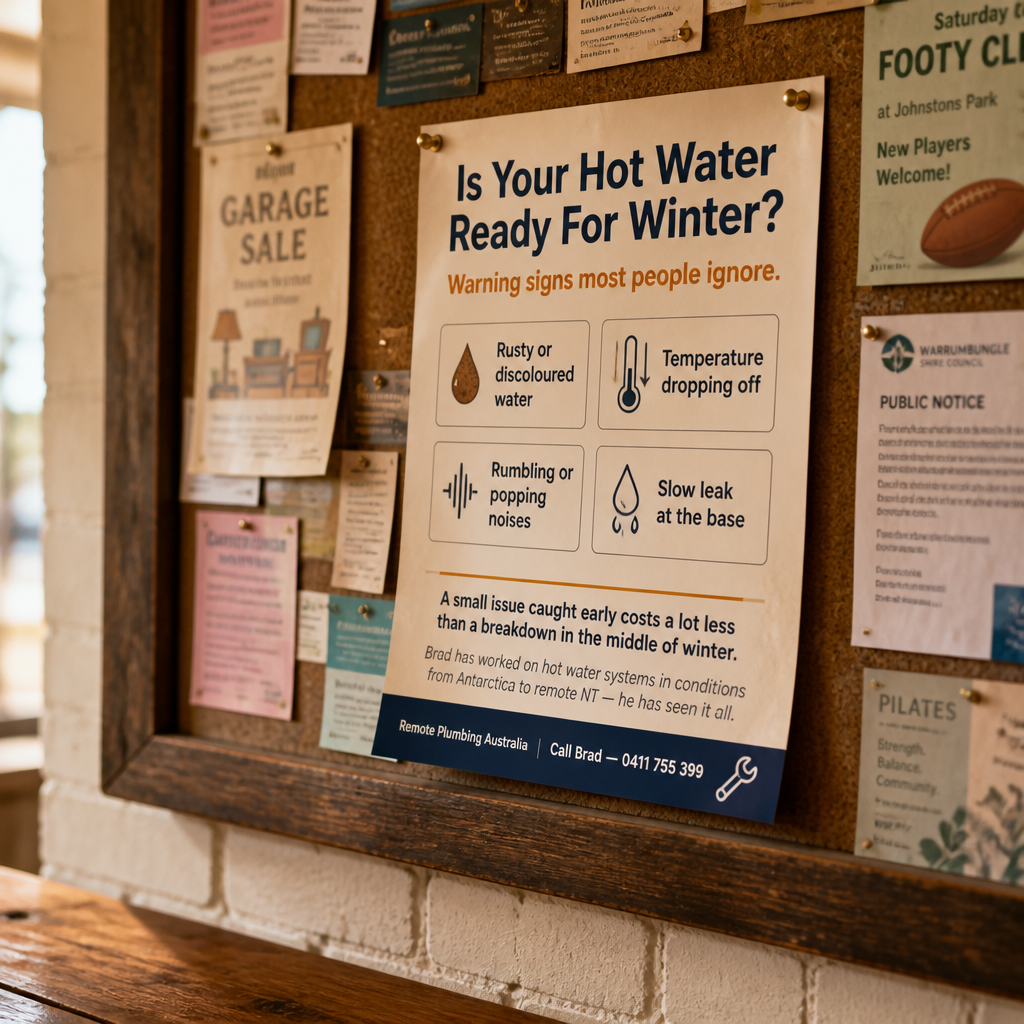
Rusty or discoloured water. If the hot water coming out of your taps has a brown or reddish tinge, that is often a sign that the inside of the tank is corroding. It can also point to a sacrificial anode rod that has worn out and is no longer doing its job. Either way, it is worth getting checked sooner rather than later.
A drop in water temperature. If your showers are not as hot as they used to be, or the system is taking longer to recover after a big draw, something is going on. On a storage system it could be a failing element or thermostat. On a continuous flow system there are a few other possibilities. The point is, it will not fix itself.
Rumbling or popping noises. A hot water system that is making noises it did not used to make is usually telling you something. Sediment buildup at the bottom of the tank is a common cause. As the element heats water through the sediment layer, you get that rumbling sound. Left alone, it reduces efficiency and can shorten the life of the system considerably.
Water pooling around the base of the unit. Any moisture around the base of a storage hot water system is a red flag. It could be a pressure relief valve doing its job and releasing excess pressure, which itself is worth investigating. Or it could be a slow leak from the tank, which is a much more serious issue. Either way, it is not something to leave and hope for the best.
The system's age. Most storage hot water systems have a service life of around 10 to 15 years with reasonable maintenance. If yours is getting up there in age and has not been looked at in a while, it is simply worth having someone cast an eye over it before winter properly bites.
What Brad Has Seen Across Some Pretty Unforgiving Environments
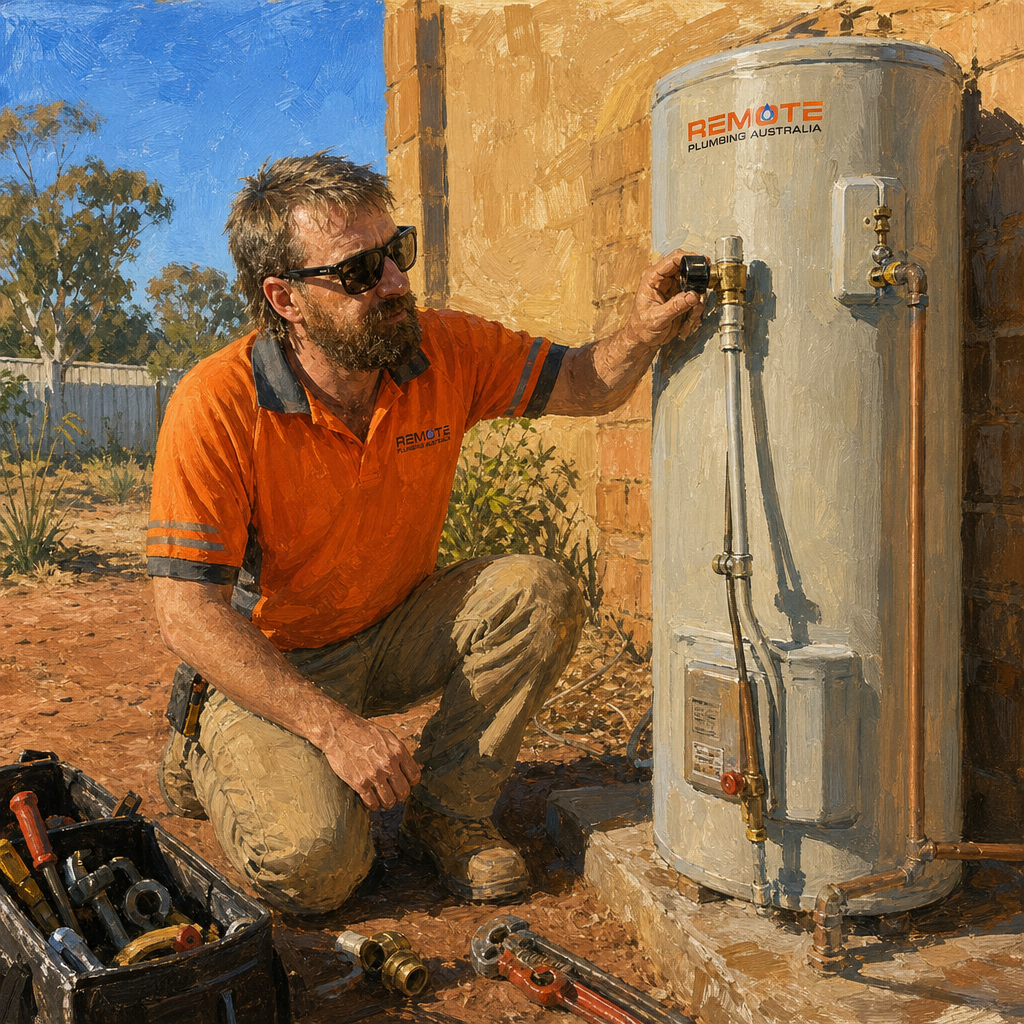
Working on hot water systems in Antarctica changes the way you think about this stuff. At minus 40, there is no such thing as a small problem. If the hot water goes down in that environment, the consequences are serious and the repair has to happen regardless of the conditions outside. You learn very quickly that catching a small fault early is not just cheaper. It is critical.
The same principle held true working on extremely remote communities in Central Australia, hours from the nearest town and a long way from parts suppliers. When you are that far from backup, you develop a different relationship with preventative maintenance. You look for problems before they become failures, because a failure in that context is a much bigger deal than it would be in a suburban street with a plumber around the corner.
The good news for people in Wentworth, Dareton, Gol Gol, and surrounds is that you do not have to operate under those extremes. But the underlying lesson is the same wherever you are. A small issue caught early is almost always cheaper and less disruptive than a system failure in the depths of winter.
Storage, Continuous Flow, or Solar: Does It Matter?
The warning signs above apply broadly, but the specifics can vary depending on what type of system you have.
Storage systems, whether electric or gas, have a tank that holds heated water. They are what most people in the region have, and they tend to give more visible warning signs like the noises and leaks mentioned above.
Continuous flow systems, also called instantaneous or tankless systems, heat water on demand. They do not have the same tank corrosion risks but they have their own service requirements, particularly around the heat exchanger and gas components on gas units.
Solar systems with a gas or electric boost add another layer of complexity, with both the solar collector side and the backup system to think about.
If you are not sure what you have or when it was last looked at, that is a reasonable starting point for a conversation. Brad services all types across the district and can give you a straight assessment of where things are at without trying to push you toward anything you do not need.
When to Call and What to Expect
If your hot water system is showing any of the signs above, the right call is to get it looked at before winter is in full swing. The lead time for parts and replacement units can stretch out during the colder months when demand is higher, so earlier is better.
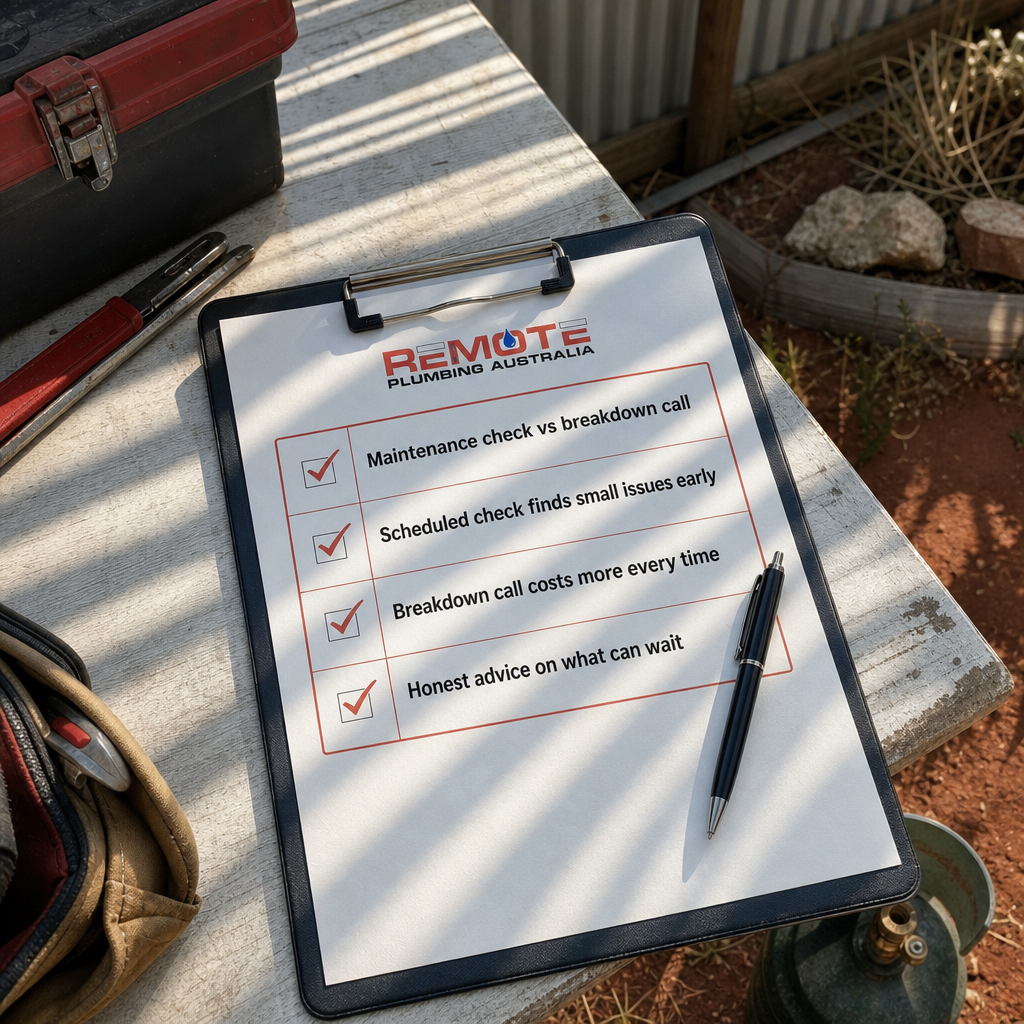
If your system is relatively young and well maintained, a check might be all it needs. If it is older or showing multiple warning signs, Brad will give you an honest read on whether it is worth servicing or whether a replacement is the smarter move for the long run. Either way, you will get a straight answer, not a sales pitch.
The most common situation is that people have been ignoring a sign for a while, the system finally gives up on a cold Wednesday morning, and then it becomes an urgent job instead of a planned one. Urgent is always more stressful and usually more expensive than planned. Getting ahead of it now is genuinely the better position to be in.
If your hot water system is playing up, making noises it should not be making, or you simply cannot remember the last time it was serviced, now is a good time to sort it out before winter puts the pressure on. Give Brad a call and he will come and have a look.
Need a plumber in Mildura? Call Brad on 0411 755 399 or visit remoteplumbingaustralia.com.au