There is no shortage of plumbing advice floating around Mildura. Some of it comes from a neighbour, some from a bloke at the hardware store, and some from a forum post that was probably written in 2009. The hot water system tends to attract the most mythology of any appliance in the house. People form strong opinions about them, pass those opinions on, and before long a half truth becomes accepted fact.
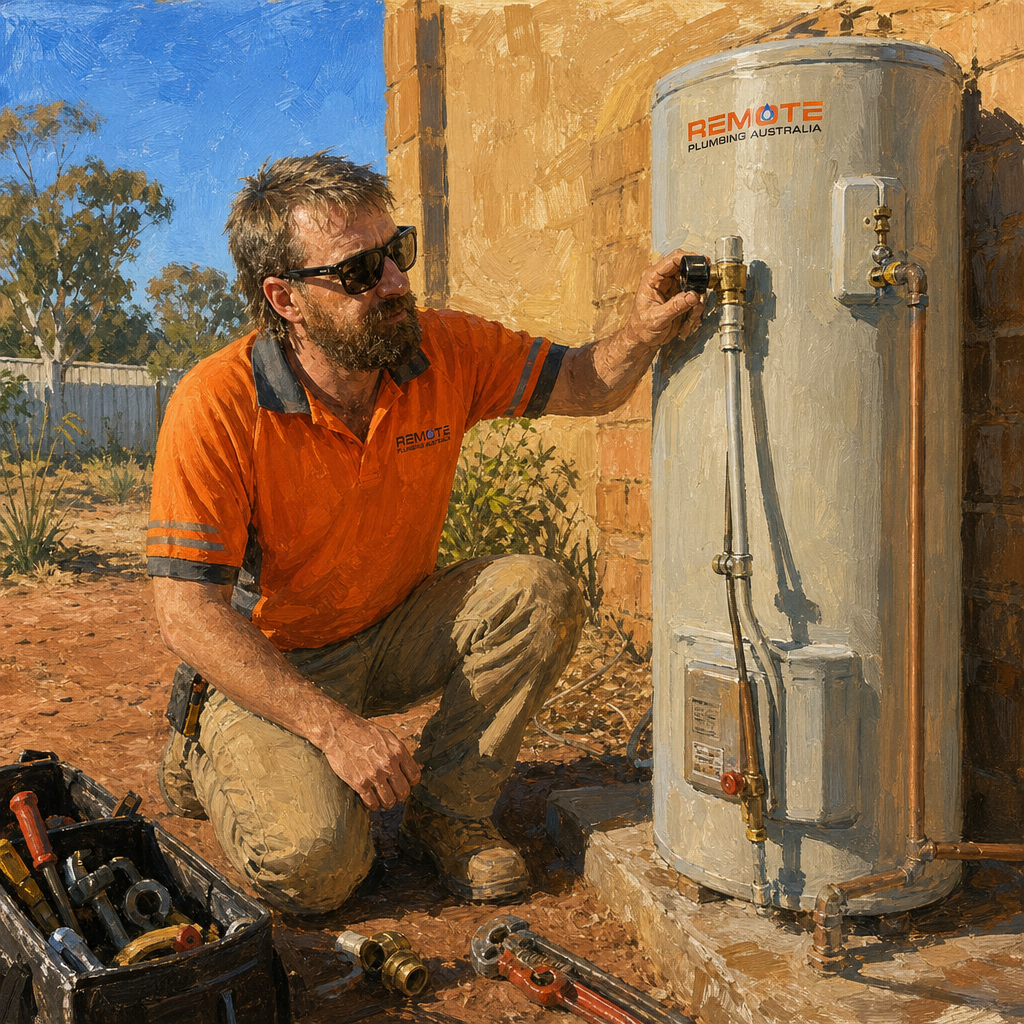
After more than twenty years working across some genuinely demanding environments, including remote communities in Central Australia and two seasons maintaining plumbing systems at Casey Station in Antarctica, Brad has heard pretty much every hot water myth going. Here are the ones that come up most often across Sunraysia, and the honest truth behind each one.
Myth 1. If You Have Hot Water, the System Is Fine
This is probably the most common one. The logic goes something like this. The water is hot, the shower works, therefore nothing is wrong. It sounds reasonable until you understand what is actually happening inside a hot water system that is on its way out.
A storage hot water unit can be quietly corroding from the inside, building up sediment, running a failing anode rod, or operating with a pressure relief valve that is well past its service life. None of those things will stop your shower from being hot. Not until the day they cause a much bigger problem.
The anode rod is a good example. It is a sacrificial component designed to protect the inner tank from corrosion. When it deteriorates completely and is not replaced, the corrosion turns its attention to the tank itself. By the time you notice rust coloured water or a drop in pressure, the tank is often already compromised. Regular servicing catches this well before it becomes an expensive situation.
Hot water coming out of the tap is confirmation the system is working. It is not confirmation the system is healthy.
Myth 2. Turning the Thermostat Up Means More Hot Water
This one is understandable. It makes intuitive sense. Higher temperature equals more hot water, right? Not quite.
A storage hot water system holds a fixed volume of water. Whether that water is set to 60 degrees or 75 degrees does not change how many litres the tank holds. What you actually get from a higher thermostat setting is hotter water, which you then mix with cold water at the tap or shower to bring it down to a comfortable temperature. In practice, a higher thermostat can make a tank feel like it lasts longer because you are mixing in more cold water, but the tank capacity itself has not changed.
The other side of this is energy use. Running your system hotter than it needs to be costs more to run and puts more stress on the unit over time. Australian standards recommend storage systems be set to at least 60 degrees to prevent legionella growth, but cranking it significantly beyond that for the sake of more hot water is not the answer. If your household is regularly running out of hot water, the more likely explanations are that the tank is undersized for the number of people using it, the element or burner is underperforming, or the system needs a service.
Myth 3. A Small Leak on a Hot Water System Is Not Worth Worrying About
Brad hears this one fairly regularly. The thinking is that a drip here or a bit of moisture around a fitting there is just normal wear and not really an issue. In some cases people have been watching a small leak for months before calling anyone.
The pressure relief valve is a good example of where this thinking can go wrong. A small, occasional release from the TPR valve can be normal under certain conditions. But a valve that is weeping constantly, or one that has been dripping so long it has left a permanent stain or corrosion trail, is telling you something. Either the system pressure is running too high, the valve itself is failing, or the expansion control on the unit needs attention. None of those are situations worth ignoring.
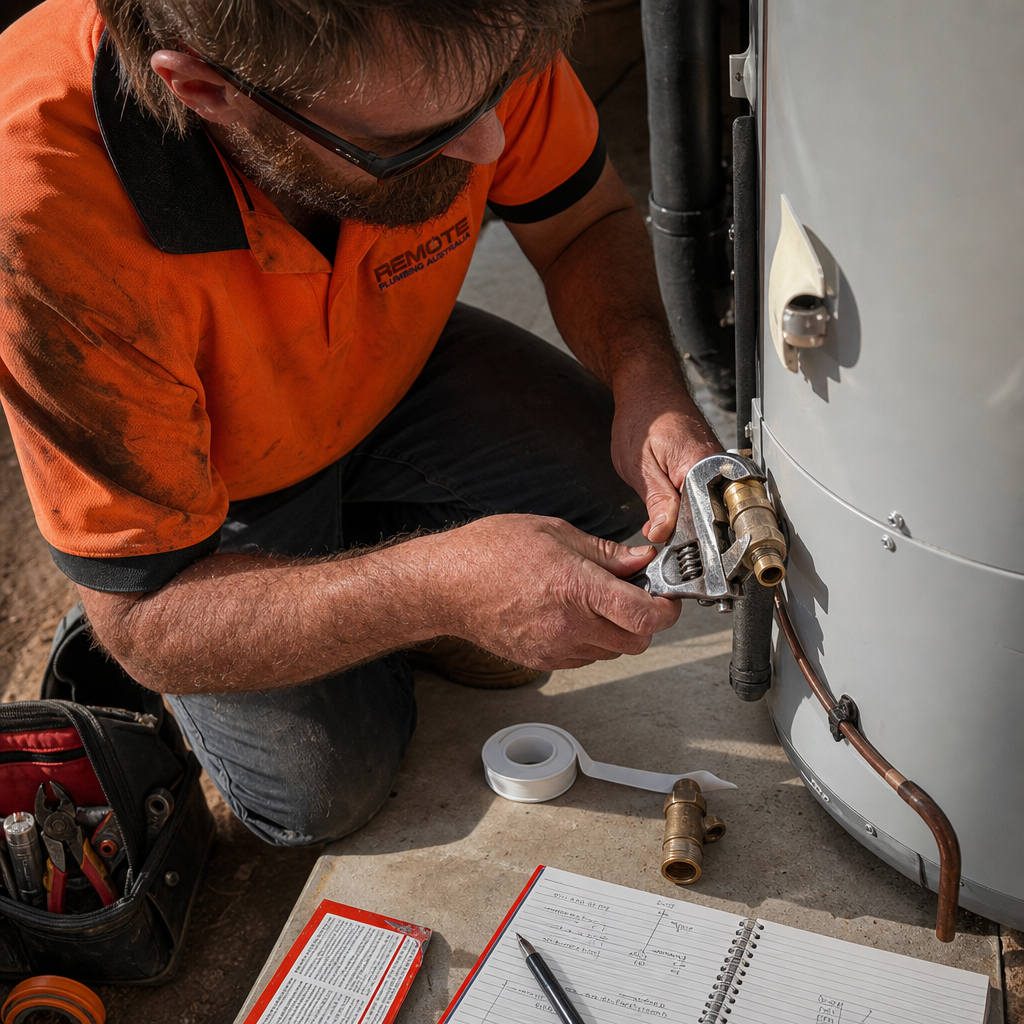
Leaks around tank fittings, base plates, or supply connections also tend to get worse over time, not better. Water finding its way into wall cavities or subfloors creates a secondary set of problems that go well beyond the hot water system itself. A leak that looks minor today is worth getting a proper set of eyes on sooner rather than later.
Myth 4. All Hot Water Systems Are Basically the Same
This one tends to surface when someone is shopping around for a replacement system and a mate tells them to just grab the cheapest unit available because they are all the same under the hood. They are not.
Storage electric, continuous flow gas, solar with electric or gas boost, and heat pump systems all operate on fundamentally different principles and suit different households and circumstances. In Greater Sunraysia, local factors matter too. Water quality in the region, the size of the household, whether the property is on natural gas or LPG, the orientation of the roof for solar, how much hot water is used and when, all of these influence which system will actually perform well and give the best value over time.
There is also a growing shift nationally toward heat pump and electric systems as gas connections become less common in new builds and retrofits. The technology has improved considerably and in the right application heat pump hot water can be genuinely efficient. But it is not a universal solution for every property or situation.
Getting the right system matched to your actual circumstances is more important than chasing the lowest upfront cost. A system that is wrong for your home will cost you more over its life, not less.
Myth 5. Hot Water Systems Last as Long as the House
This might be the most optimistic myth on the list. The general expectation in Australia for a storage hot water unit is roughly eight to twelve years of reliable service with proper maintenance. Some units do go longer. Many do not reach that without problems, particularly if they have never been serviced.
If you have moved into a property and do not know how old the hot water system is, it is worth finding out. The serial number on most units encodes the manufacture date and a licensed plumber can read it quickly. Knowing the age of the system helps you plan rather than react. A unit that is nudging ten years old and starting to show signs of wear is not an emergency today, but it is worth factoring into your maintenance budget.
Waiting until a hot water system fails completely, usually at the worst possible moment, means you are making a rushed decision about a replacement instead of a considered one. That rarely leads to the best outcome.
Straight Answers Are Worth More Than Guesswork
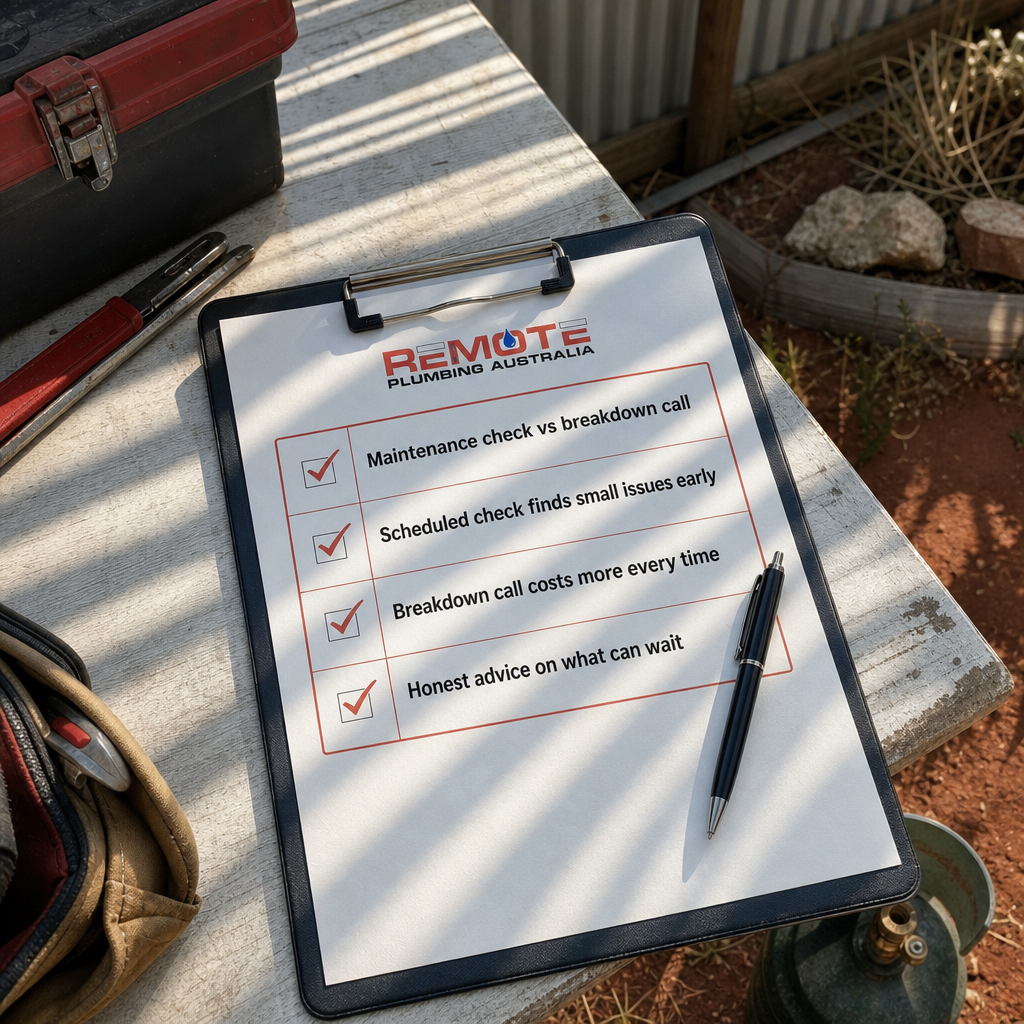
The common thread through all of these myths is that they lead people to either ignore something that needs attention or spend money on something that will not actually solve the problem. Brad's approach has always been to explain what is actually going on, give you a straight read on whether it needs fixing now or can wait, and let you make the call from there. No upselling, no alarm bells, just an honest assessment from someone who has seen a lot of hot water systems in a lot of conditions.
If your hot water system is playing up, making noise, running inconsistently, or you just want to know how it is actually tracking, it is worth getting it looked at by someone who will give you a straight answer.
Need a plumber in Mildura? Call Brad on 0411 755 399 or visit remoteplumbingaustralia.com.au